Enhancing Multithreaded Code for 2026 Hardware Architectures

Confirmation Advancement in 2026
Automated confirmation systems in 2026 have moved far beyond basic grid-based image choice. The current environment features systems that analyze human habits in real-time, concentrating on micro-movements of the cursor, the rhythm of keystrokes, and even the physiological patterns suggested by touch-screen interactions. These systems, often described as Multi-modal Habits Analysis (MBA), produce a high bar for automated software application attempting to interact with web services. Efficiency in 2026 is no longer simply about resolving a fixed puzzle. It has to do with keeping a technical environment that can mimic human interaction at a deep, algorithmic level.Software designers now face difficulties that need more than simply raw processing power. The interaction between a user agent and a security obstacle includes complex data exchanges that can determine automation within milliseconds. To preserve high success rates, technical facilities should be built with a focus on low-latency execution and high-fidelity simulation. This requires a shift from standard cloud circumstances to specialized hardware capable of running advanced neural designs.
The Infrastructure of High-Throughput Fixing
Constructing a system capable of dealing with 2026-era security difficulties requires a rethink of traditional server setups. Basic CPUs frequently fight with the heavy mathematical requirements of modern vision transformers and behavioral synthesis models. Rather, engineers are moving towards architectures that utilize devoted tensor processing units and high-memory-bandwidth GPUs. These components permit the fast execution of designs that translate and respond to verification triggers in real-time. Performance in these systems depends on how rapidly information can move in between the network interface and the inference engine. When a verification difficulty is gotten, the system should process the visual or behavioral data, run it through a design, and produce a reaction that simulates human variance. Any delay in this procedure acts as a red flag for modern-day security filters. Organizations finding success in this field frequently credit their outcomes to deep competence in Asia Virtual Solutions Guides, which helps handle the circulation of data across distributed nodes.
Hardware Restrictions and Tensor Processing
The hardware options made in 2026 focus heavily on throughput per watt. Running large-scale automation needs thousands of concurrent sessions, each needing its own piece of compute for AI reasoning. Hardware such as the newest H-series tensor cores or specialized RISC-V accelerators has actually ended up being basic. These chips are developed specifically to handle the matrix multiplications that define 2026 neural networks.Using these specialized units decreases the physical footprint of an information center while increasing the capacity for synchronised tasks. A rack of tensor-optimized servers in 2026 can handle the work that would have needed an entire floor of hardware a few years back. This density is a crucial consider keeping operational expenses low while keeping the speed required to bypass security measures before they time out.
Software Engineering for High Effectiveness
While hardware provides the structure, the software application stack figures out the real efficiency of the solving process. In 2026, the choice has actually moved towards languages like Go and Rust for the core networking logic. These languages provide the concurrency required to manage countless simultaneous connections without the overhead seen in older translated languages. Python stays the standard for model reasoning, however it is frequently wrapped in high-performance C++ extensions to guarantee the transition from network package to AI input is as quickly as possible.The reasoning utilized to replicate human behavior should likewise be highly enhanced. Instead of easy direct movements, 2026 software utilizes Perlin noise and generative models to create cursor courses that look natural. These paths are produced on the fly, requiring the software application to be lean and responsive. Combination of Asia Virtual Solutions Guides into the advancement cycle permits better management of these complex software application requirements.
Latency Decrease in International Clusters
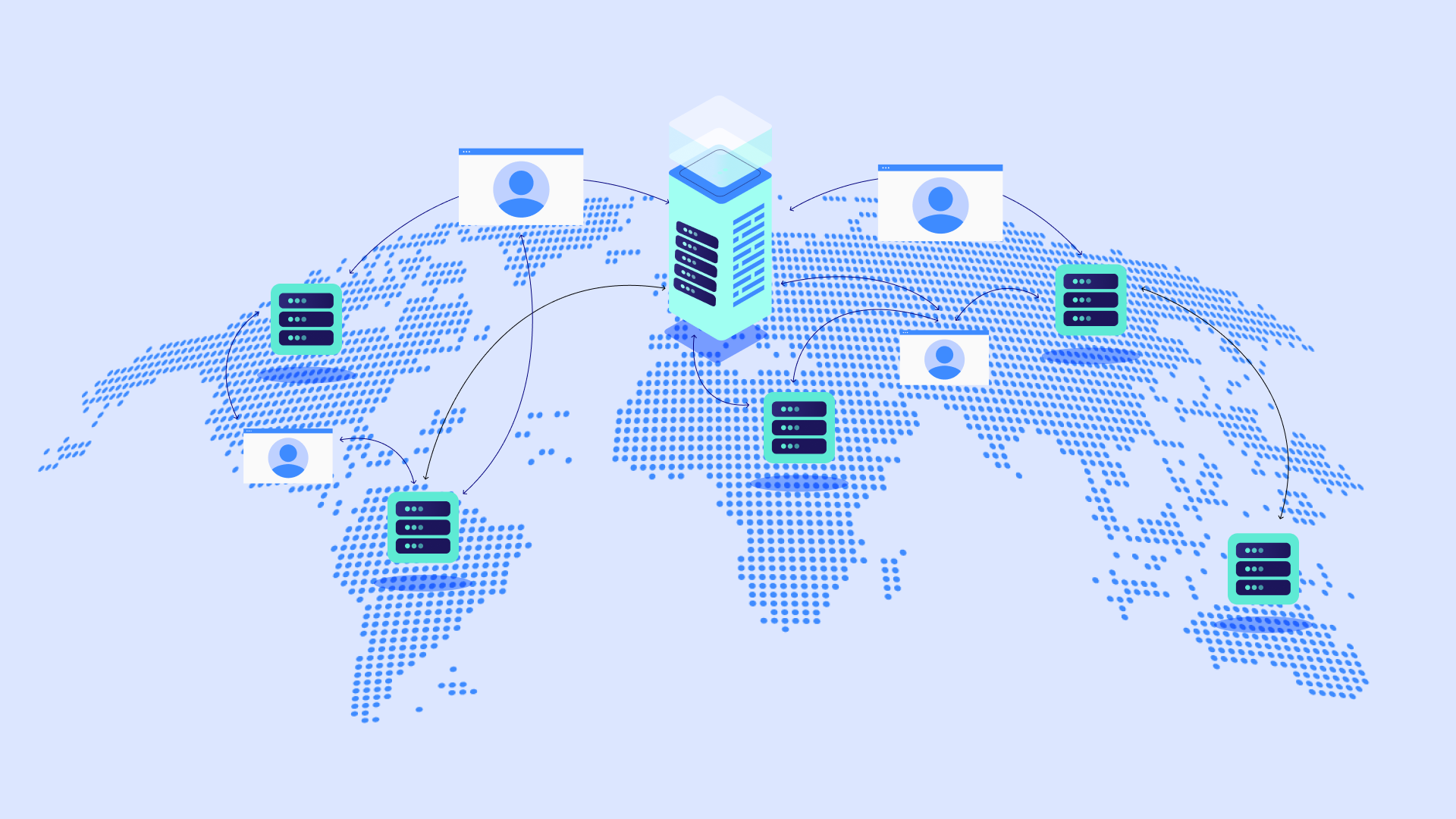
Network latency is perhaps the greatest opponent of efficient confirmation fixing in 2026. Security systems inspect not only the accuracy of an answer however likewise the speed at which it was provided. An action that arrives too rapidly or too slowly relative to a human average is instantly flagged. To counter this, infrastructure is often distributed internationally to make sure the fixing node is physically near to the target server.Edge computing has become a standard part of this technical stack. By running inference designs on servers found at the network edge, designers can decrease the round-trip time of a request. This distance enables the software application to wait for the "human-correct" minute to send an action, rather than being postponed by the physics of long-distance optical fiber. This level of control over timing is a main factor in maintaining high reputation ratings for automatic agents.
Information Dealing With and Artificial Training Sets
The designs that power 2026 solvers require enormous amounts of information to remain effective. Since security difficulties progress weekly, the facilities should support a continuous loop of data collection, labeling, and design retraining. In 2026, much of this is handled through artificial information generation. Developers produce virtual environments where they can tape-record millions of human-like interactions to train their models without requiring to scrape real-world data constantly.This cycle of constant enhancement needs a storage and compute pipeline that can deal with petabytes of interaction data. Effective systems utilize NVMe-over-Fabrics (NVMe-oF) to guarantee that the AI training clusters are never ever waiting on data to arrive from the disks. The speed of this pipeline identifies how rapidly a system can adjust to a new type of obstacle launched by a security supplier.
The Function of Proxy Management
High-efficiency fixing is useless if the underlying IP address is obstructed. In 2026, proxy management has become a technical discipline of its own. It is no longer adequate to simply turn through a list of addresses. The facilities must analyze the health, speed, and credibility of each proxy in real-time. Modern systems utilize machine discovering to anticipate which IP addresses are most likely to be challenged and which are most likely to pass through without a puzzle.This predictive approach reduces the variety of obstacles the system needs to resolve in the first place, which is the ultimate form of effectiveness. By optimizing the selection of proxies and the fingerprinting of the web browser environment, the software application prevents unneeded calculate cycles. This level of precision is what separates high-end expert systems from basic automation scripts in 2026.
Resource Allowance and Cost Management
Running an international network of tensor-optimized servers is pricey. In 2026, technical leads focus on vibrant resource allowance to keep costs under control. This includes spinning up capability in regions where obstacle problem has increased and downsizing in regions where the security steps are less intense. Automation of this scaling process ensures that the company is not paying for idle GPU time.The usage of spot instances and preemptible VMs has actually ended up being a common method for dealing with the bursty nature of verification solving. Due to the fact that the work is often parallel and stateless, a system can lose a couple of nodes without impacting the total success rate. This enables using more affordable, less steady calculate resources, which substantially lowers the rate per fix.
Technical Challenges in 2026
As we look at the current year, it is clear that the fight between security companies and automation developers reveals no signs of decreasing. The difficulties are getting harder, requiring more memory and more sophisticated AI. We are seeing the rise of "proof-of-work" challenges where the customer need to carry out an intricate computation before the verification even starts. This is developed to drain pipes the CPU resources of the solver, making it more expensive to run automation at scale.To counter these steps, designers are looking into much more specific hardware, such as FPGAs that can be reconfigured to manage specific proof-of-work algorithms. This represents the next action in the infrastructure race. Systems that can adapt their hardware reasoning on the fly will be the ones that keep effectiveness as we move through 2026 and beyond.
Last Hardware Factors To Consider
The success of a 2026 technical guide depends upon the ability to balance speed, cost, and human-mimicry. Every part of the stack, from the silicon in the servers to the Go code in the networking layer, need to be tuned for a particular type of performance. Systems that disregard the significance of low-level optimization discover themselves unable to take on more efficient architectures. Maintaining a lead in this field requires constant tracking of the interaction in between software logic and hardware execution. As security systems become more ingrained with AI-driven behavioral analysis, the facilities used to process these obstacles will only end up being more specialized. The technical demands are high, however for those who can keep a stable and effective environment, the results promote themselves. The focus stays on minimizing the friction between the automated agent and the confirmation endpoint, ensuring that every solve is as fast and as human-like as possible. In 2026, efficiency is the only metric that matters.