Establishing a Robust Engine Selection Logic for 2026
Modern Reasoning in Proxy Infrastructure for 2026
Software application performance in 2026 depends heavily on the speed and reliability of information exchange. As automated systems end up being more dependent on real-time info, the physical and logical layers of proxy management have actually moved from basic IP changing to complicated request orchestration. High-performance applications now need a sophisticated technique to deal with the increased security protocols found in modern digital markets. Fixed proxy lists are no longer adequate when target servers utilize machine learning to determine and obstruct abnormal traffic patterns in milliseconds.The current technical environment favors systems that treat each request as a distinct event with particular metadata requirements. This includes managing headers, cookies, and TLS finger prints to match the anticipated profile of a legitimate user. Software engineers are concentrating on how to integrate these layers without including significant latency to the stack. A small hold-up in a proxy handshake can ripple through a system, triggering timeouts and information loss in high-speed automated data operations.
Rotation Algorithms and Request Circulation
Efficient rotation reasoning in 2026 is no longer a linear procedure. Basic round-robin approaches frequently activate security informs since they do not have the randomness found in human habits. Rather, advanced systems use probabilistic distribution models. These models examine the health of an IP swimming pool in real-time, designating demands based upon the historical success rate of specific IP varieties versus certain targets. Success in these operations frequently depends upon Michael Swart Settings to preserve high throughput.Session determination has actually become an important variable in this formula. While some jobs need a new IP for each demand, others need a "sticky" session where the IP remains continuous for a number of minutes to finish a multi-step deal. Modern software should determine the optimum session length based on the target site's sensitivity. In lots of cases, forced rotation takes place only after a particular trigger, such as a modification in the action header or a viewed increase in latency. This adaptive method makes sure that the software application keeps a high success rate while lessening the overhead of consistent IP changing.
Handling Fingerprinting and Protocol Development
Internet browser fingerprinting has advanced substantially by 2026. Security systems now look far beyond the IP address, analyzing the HTTP/3 QUIC handshake patterns and the particular variations of file encryption libraries utilized by the customer. If a proxy server does not support the latest protocols, it ends up being a beacon for anti-bot filters. Technical infrastructure must support full procedure parity with modern-day web browsers to remain effective.Managing these finger prints needs a layer of middle-ware that can inject or customize headers on the fly. This includes changing user-agent strings to match the current year and guaranteeing that the underlying hardware signatures do not contravene the software's claimed environment. When software application handles web-based data retrieval, it needs to also account for the passive fingerprinting of the TCP/IP stack, which can expose the difference between a property connection and an information center server.
Geographical Circulation and Edge Computing
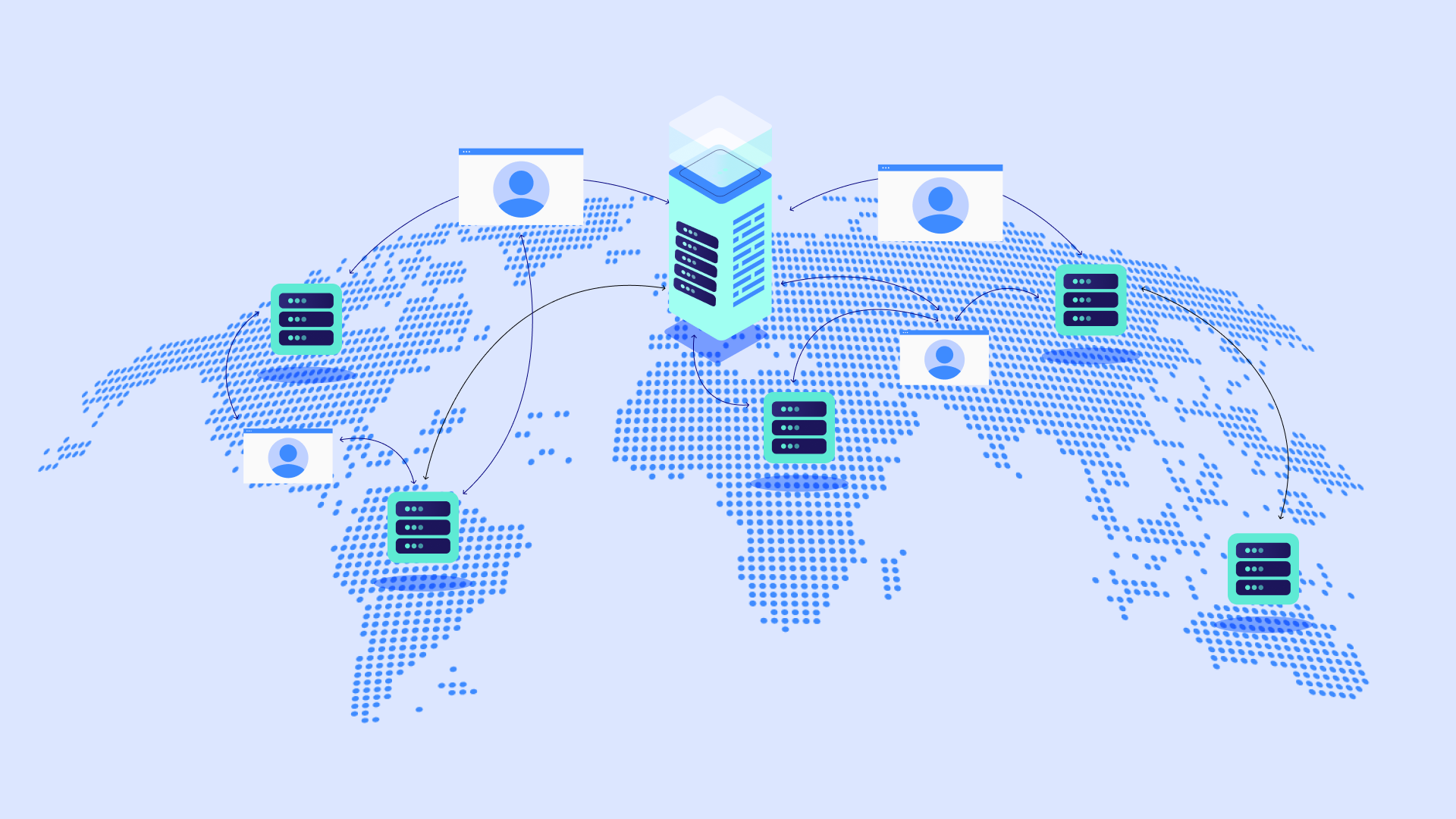
The physical location of a proxy server substantially affects the efficiency of the software it supports. In 2026, the trend has actually shifted towards edge proxying, where the rotation logic lives as close as possible to the target server's information. This decreases the time-to-first-byte (TTFB) and improves the overall dependability of the connection. Organizing these resources across various global regions permits for localized information access that bypasses local restrictions.High-velocity tasks often require Michael Swart GSA SER Advanced Settings to browse complicated security layers. By placing proxy nodes in the same metropolitan location as the target, software can simulate the latency patterns of regional users. This is particularly crucial for applications that rely on hyper-local content or prices, where even a few milliseconds of difference in packet travel time can indicate that a request is originating from an automated source instead of a regional citizen.
AI-Driven Mistake Healing and Swimming Pool Upkeep
The health of a proxy swimming pool varies constantly. IPs are flagged, ISP routing modifications, and hardware stops working. In 2026, manual monitoring of these swimming pools is difficult due to the scale of modern data operations. Automated maintenance systems now utilize predictive analytics to identify IPs that are likely to fail before they actually do. If an IP variety reveals a 5% drop in success rate, the system instantly cycles it out of the active pool for a "cool-down" period.This self-healing infrastructure is a core component of software application performance. Instead of the software stopping working and requiring a manual reboot, the proxy management layer manages the mistake healing. When a 403 Forbidden or 429 Too Many Demands error takes place, the rotation engine instantly attempts a various IP with a various fingerprint, frequently before the primary application logic even registers a problem. This creates a resistant layer that enables designers to concentrate on information processing rather than connection management.
The Function of Residential and Mobile IP Networks
The difference in between data center IPs and property IPs has widened. Many sophisticated platforms in 2026 have actually totally blocked or heavily throttled traffic originating from known information center ranges. This has actually led to an increased dependence on residential and mobile proxy networks. These networks use IPs assigned by regional ISPs to home users or mobile phones, making them much harder to identify from real customer traffic.Integrating these networks requires careful management of information expenses and connection stability. Mobile IPs, for example, are susceptible to frequent signal drops and IP changes. Software application needs to be created to handle these disturbances gracefully. For jobs in high-density tech corridors, mobile proxies provide the greatest level of privacy since thousands of users typically share the same gateway IP, offering a natural "crowd" to mix into.
Optimizing Throughput with Multiplexing
Multiplexing involves sending out several demands over a single connection or using several proxy tunnels simultaneously to increase data transfer rates. In 2026, HTTP/3 has actually made this more efficient by lowering the "head-of-line blocking" issues found in older protocols. A well-optimized software application stack can keep hundreds of concurrent streams through a handled proxy gateway without saturating the regional network interface.This level of performance is needed for massive operations like rate tracking or belief analysis across millions of pages. The rotation method need to be conscious of the multiplexing limitations of each proxy supplier. Overwhelming a single proxy connection can cause throttled speeds or connection resets, which reduces the effective work done per second. Stabilizing the variety of streams against the variety of available IPs is a delicate optimization issue that needs continuous change.
Personal privacy and Compliance in Automated Systems
As information guidelines have actually tightened up in 2026, proxy management should also account for legal and ethical limits. Technical facilities must include filters to make sure that data is just accessed from permitted areas and that the software respects the terms of service as much as possible. Effective systems typically consist of a "compliance layer" that logs proxy usage and ensures that no single target is hit with an overwhelming amount of traffic from a single source, avoiding unintentional denial-of-service scenarios.Effective proxy management in 2026 is a continuous process of adjustment. As security procedures evolve, the methods used to bypass them should end up being more subtle and technically grounded. Concentrating on the crossway of hardware place, procedure precision, and intelligent rotation reasoning enables software to operate at peak performance. This technical structure makes sure that information remains accessible and that automated systems can continue to operate in a significantly protected digital environment. Speed, anonymity, and dependability are the pillars that support the next generation of software facilities.