How to Select a VPS That Handles High Threads

Confirmation Evolution in 2026
Automated confirmation systems in 2026 have moved far beyond easy grid-based image selection. The current environment includes systems that analyze human habits in real-time, concentrating on micro-movements of the cursor, the rhythm of keystrokes, and even the physiological patterns recommended by touch-screen interactions. These systems, typically described as Multi-modal Habits Analysis (MBA), develop a high bar for automated software application trying to engage with web services. Performance in 2026 is no longer almost fixing a fixed puzzle. It has to do with preserving a technical environment that can mimic human interaction at a deep, algorithmic level.Software developers now deal with challenges that require more than just raw processing power. The interaction in between a user representative and a security challenge includes complicated data exchanges that can identify automation within milliseconds. To maintain high success rates, technical facilities should be built with a concentrate on low-latency execution and high-fidelity simulation. This requires a shift from standard cloud circumstances to specialized hardware efficient in running advanced neural models.
The Facilities of High-Throughput Solving
Building a system capable of managing 2026-era security challenges needs a rethink of conventional server setups. Standard CPUs often deal with the heavy mathematical requirements of contemporary vision transformers and behavioral synthesis designs. Instead, engineers are approaching architectures that utilize dedicated tensor processing units and high-memory-bandwidth GPUs. These parts permit the quick execution of designs that interpret and react to confirmation triggers in real-time. Effectiveness in these systems depends upon how rapidly information can move in between the network user interface and the reasoning engine. When a confirmation obstacle is gotten, the system should process the visual or behavioral data, run it through a design, and produce an action that simulates human variance. Any delay in this procedure functions as a red flag for contemporary security filters. Organizations discovering success in this field typically credit their outcomes to deep competence in Asia Virtual Solutions, which helps manage the circulation of data throughout distributed nodes.
Hardware Restrictions and Tensor Processing
The hardware choices made in 2026 focus greatly on throughput per watt. Running large-scale automation requires thousands of concurrent sessions, each needing its own piece of compute for AI reasoning. Hardware such as the most current H-series tensor cores or specialized RISC-V accelerators has become standard. These chips are created specifically to deal with the matrix reproductions that define 2026 neural networks.Using these specialized units minimizes the physical footprint of a data center while increasing the capacity for simultaneous tasks. A rack of tensor-optimized servers in 2026 can deal with the work that would have needed an entire flooring of hardware a couple of years back. This density is a key consider keeping operational costs low while preserving the speed needed to bypass security procedures before they time out.
Software Engineering for High Performance
While hardware supplies the foundation, the software stack figures out the actual efficiency of the resolving process. In 2026, the preference has shifted towards languages like Go and Rust for the core networking logic. These languages offer the concurrency required to manage thousands of simultaneous connections without the overhead seen in older analyzed languages. Python stays the requirement for design reasoning, but it is often wrapped in high-performance C++ extensions to make sure the shift from network package to AI input is as fast as possible.The logic utilized to imitate human behavior needs to likewise be highly enhanced. Instead of basic linear motions, 2026 software application utilizes Perlin noise and generative models to create cursor paths that look organic. These courses are generated on the fly, needing the software application to be lean and responsive. Integration of Asia Virtual Solutions into the advancement cycle enables for much better management of these complicated software requirements.
Latency Reduction in Global Clusters
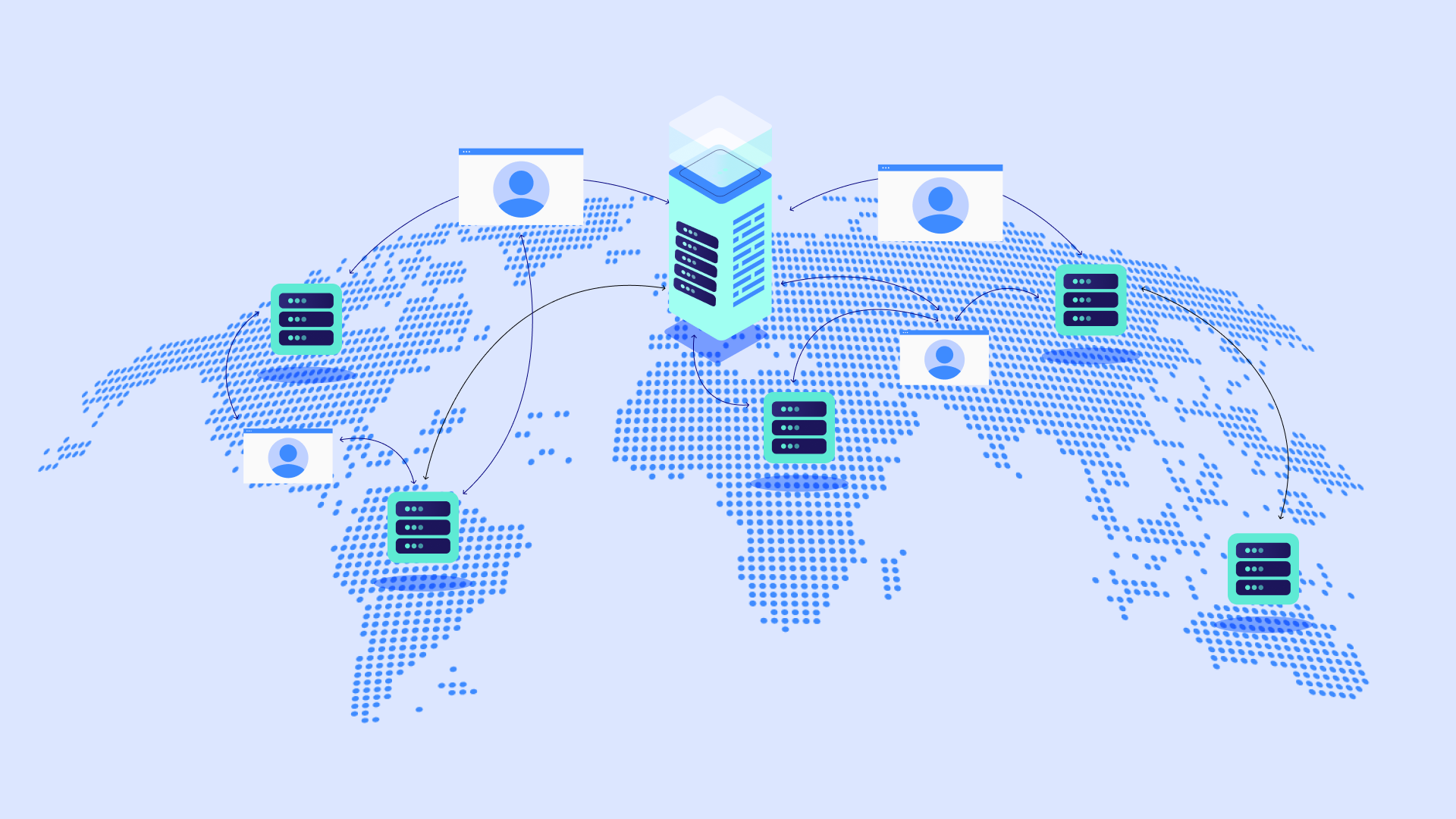
Network latency is possibly the biggest enemy of effective verification resolving in 2026. Security systems check not only the correctness of a response however likewise the speed at which it was delivered. A response that shows up too rapidly or too slowly relative to a human average is immediately flagged. To counter this, infrastructure is frequently distributed globally to make sure the solving node is physically near the target server.Edge computing has actually ended up being a basic part of this technical stack. By running reasoning designs on servers located at the network edge, designers can minimize the round-trip time of a demand. This distance allows the software to wait for the "human-correct" moment to submit a reaction, instead of being postponed by the physics of long-distance fiber optics. This level of control over timing is a main aspect in keeping high credibility ratings for automated representatives.
Information Handling and Artificial Training Sets
The models that power 2026 solvers require enormous amounts of information to stay reliable. Because security challenges progress weekly, the infrastructure needs to support a constant loop of data collection, labeling, and model retraining. In 2026, much of this is handled through synthetic information generation. Developers develop virtual environments where they can tape countless human-like interactions to train their models without needing to scrape real-world information constantly.This cycle of constant improvement needs a storage and compute pipeline that can manage petabytes of interaction information. Efficient systems use NVMe-over-Fabrics (NVMe-oF) to make sure that the AI training clusters are never awaiting data to get here from the disks. The speed of this pipeline identifies how rapidly a system can adjust to a new kind of challenge launched by a security service provider.
The Role of Proxy Management
High-efficiency resolving is ineffective if the underlying IP address is obstructed. In 2026, proxy management has actually ended up being a technical discipline of its own. It is no longer sufficient to just turn through a list of addresses. The facilities must evaluate the health, speed, and reputation of each proxy in real-time. Modern systems utilize maker finding out to anticipate which IP addresses are most likely to be challenged and which are likely to pass through without a puzzle.This predictive approach reduces the number of difficulties the system needs to solve in the very first location, which is the supreme kind of effectiveness. By optimizing the choice of proxies and the fingerprinting of the web browser environment, the software prevents unneeded compute cycles. This level of precision is what separates high-end expert systems from standard automation scripts in 2026.
Resource Allotment and Expense Management
Running a worldwide network of tensor-optimized servers is expensive. In 2026, technical leads concentrate on dynamic resource allotment to keep costs under control. This involves spinning up capability in areas where obstacle problem has increased and scaling back in areas where the security steps are less extreme. Automation of this scaling process ensures that the company is not paying for idle GPU time.The usage of spot circumstances and preemptible VMs has become a typical strategy for dealing with the bursty nature of verification resolving. Because the work is frequently parallel and stateless, a system can lose a few nodes without impacting the total success rate. This enables making use of less expensive, less steady compute resources, which substantially lowers the rate per resolve.
Technical Challenges in 2026
As we take a look at the existing year, it is clear that the battle in between security suppliers and automation designers shows no indications of slowing down. The obstacles are getting harder, needing more memory and more sophisticated AI. We are seeing the rise of "proof-of-work" challenges where the client need to perform a complicated computation before the confirmation even starts. This is created to drain the CPU resources of the solver, making it more expensive to run automation at scale.To counter these procedures, designers are looking into even more specific hardware, such as FPGAs that can be reconfigured to manage specific proof-of-work algorithms. This represents the next step in the facilities race. Systems that can adapt their hardware logic on the fly will be the ones that keep efficiency as we move through 2026 and beyond.
Last Hardware Considerations
The success of a 2026 technical guide depends upon the ability to stabilize speed, cost, and human-mimicry. Every part of the stack, from the silicon in the servers to the Go code in the networking layer, must be tuned for a specific kind of performance. Systems that disregard the importance of low-level optimization discover themselves not able to take on more effective architectures. Keeping a lead in this field requires consistent tracking of the interaction in between software reasoning and hardware execution. As security systems become more implanted with AI-driven behavioral analysis, the infrastructure utilized to process these challenges will just become more specialized. The technical demands are high, but for those who can keep a stable and effective environment, the results speak for themselves. The focus stays on reducing the friction in between the automated agent and the confirmation endpoint, ensuring that every solve is as quick and as human-like as possible. In 2026, performance is the just metric that matters.