Solving Haptic and Movement Captchas with New Technology

Evolution of Processing Power in 2026 Search Optimization
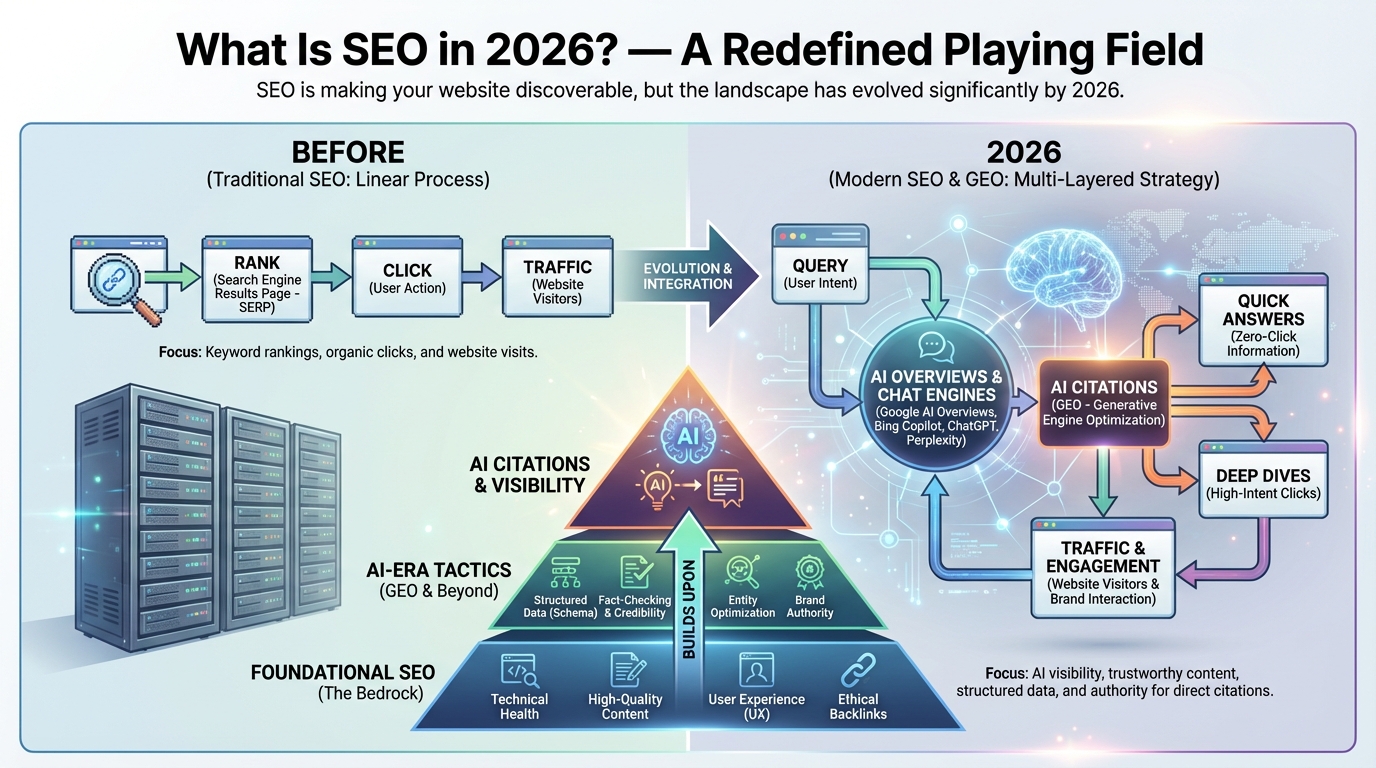
The technical requirements for data analysis have actually shifted significantly as we progress through 2026. Seo is no longer a task confined to basic keyword tracking or standard metadata audits. Instead, the focus has actually approached huge information ingestion and real-time analysis of countless data points. To preserve performance, software application must now engage with hardware in such a way that surpasses basic CPU processing. Standard serial execution struggles to equal the large volume of info being created and indexed every hour.
Hardware velocity has emerged as a need for organizations managing massive search information. By shifting particular computational tasks from a general-purpose Central Processing Unit (CPU) to specialized hardware like Graphics Processing Units (GPUs) or Tensor Processing Units (TPUs), software can process thousands of operations at the same time. This shift is especially evident in the way modern-day spiders and analysis tools handle natural language processing (NLP) In 2026, the need for Asia Virtual Solutions Proxies has actually increased as teams search for methods to decrease the time it requires to parse semantic relationships between billions of websites.
The Function of Multi-Core Architectures in Data Parsing
Modern servers in 2026 regularly feature processors with 128 cores or more as a standard configuration. However, having high core counts is only half of the option. Software must be composed to support multithreading, permitting it to split intricate tasks into smaller chunks that run in parallel. When a spider strikes a large site, a single-threaded application would process pages one by one, producing a huge line that could take days to clear. A multithreaded technique allows the software to bring, parse, and examine numerous pages at the same time.
Efficiency in these tasks depends heavily on memory bandwidth. Even the fastest processor can be throttled if the system can not move data from the RAM to the CPU quickly enough. With the adoption of DDR6 memory in 2026, information transfer rates have actually reached brand-new heights, enabling multithreaded applications to run without the data bottlenecks that prevailed in previous years. This enables much deeper analysis, such as identifying intricate internal connecting structures across huge enterprise sites in minutes instead of hours.
GPU Offloading for Large Language Design Analysis
Big Language Models (LLMs) have ended up being a staple for assessing content quality and importance. Running these designs on a basic CPU is infamously sluggish and energy-intensive. Hardware velocity through GPUs permits the parallel processing of the matrix reproductions that power these models. When an SEO tool evaluates the topical authority of a site, it utilizes these accelerated kernels to compare content versus countless high-ranking documents in real-time.
Developers are significantly utilizing specialized libraries to ensure their software can communicate straight with GPU hardware. This direct communication bypasses much of the overhead related to the operating system, leading to substantial efficiency gains. Organizations that prioritize Asia Virtual Solutions Update GSA SER Proxies often find that their ability to anticipate ranking shifts improves as they can run more complicated simulations on their regional hardware without depending on costly cloud-based API calls.
Optimizing Storage I/O for High-Speed Crawling
Data determination is a frequently ignored element of technical facilities. When running thousands of threads, the demand on the storage system is immense. Every thread needs to compose its results to a database or a flat file. Conventional Strong State Drives (SSDs) can reach their limit when confronted with the high Input/Output Operations Per Second (IOPS) needed by massive scale SEO operations. In 2026, the transition to PCIe 7.0 storage user interfaces has actually supplied the necessary throughput to deal with these work.
Utilizing NVMe drives with high endurance ratings is vital. These drives enable the software to preserve high write speeds even as the disk fills. Without this hardware support, multithreaded software would experience "I/O wait" states, where the CPU is idle since it is waiting for the storage system to end up composing information. This latency can ruin the effectiveness of a well-coded multithreaded application. Efficient data storage ensures that the insights acquired from crawling are readily available for analysis instantly.
Network Infrastructure and Latency Management
Hardware acceleration likewise extends to network user interface cards (NICs) In 2026, high-end SEO servers utilize wise NICs that can manage packet processing and file encryption offloading. This indicates the main CPU does not have to invest cycles managing the overhead of countless simultaneous HTTPS connections. By moving these tasks to the network hardware, the system can preserve higher connection speeds and lower latency when interacting with web servers across the world.
Low latency is vital when carrying out real-time analysis. If a spider takes 200 milliseconds to establish a connection due to hardware overhead, that time builds up across countless pages. Smart NICs reduce this overhead, enabling a more aggressive crawling schedule without overwhelming the host system. This level of optimization is what separates requirement tools from professional-grade infrastructure in the current year.
Thermal Management in High-Density Compute Environments
Running high-core-count CPUs and effective GPUs at optimal capacity produces an incredible amount of heat. Thermal throttling is a major opponent of software effectiveness. When a processor gets too hot, it immediately decreases its clock speed to avoid damage, which decreases the multithreaded tasks. In 2026, liquid cooling has actually ended up being a typical feature in data centers devoted to heavy data processing. Keeping the hardware at a constant temperature allows the software application to perform at peak efficiency for prolonged periods.

Infrastructure designers now take a look at the overall thermal design power (TDP) of their setups. They ensure that the cooling capacity goes beyond the heat output of the hardware during a 100% load scenario. This is particularly essential for SEO tasks that may run for a number of days straight, such as a total index refresh for an international e-commerce platform. Stable temperatures cause predictable processing times, which is important for satisfying task deadlines.
Setting for Hardware Efficiency
Software developers are altering how they compose code to better suit 2026 hardware. Languages that use low-level memory management and direct access to hardware directions are preferred for building high-performance SEO tools. Methods such as Single Guideline, Several Information (SIMD) allow the software to perform the exact same operation on several data points in a single clock cycle. This is exceptionally beneficial for jobs like computing the similarity between two different page versions or processing large batches of redirect rules.
Asynchronous shows is another crucial element. Instead of a thread waiting on a reaction from a server, it can carry on to another task while the hardware handles the network demand in the background. This makes sure that the CPU stays active as much as possible. By integrating asynchronous I/O with hardware acceleration, developers can produce tools that are several orders of magnitude much faster than those utilized simply a couple of years ago. The goal is to lessen the "dead time" where hardware is sitting idle.
Incorporating AI Accelerators into the Workflow
The increase of devoted AI accelerators has offered a brand-new opportunity for optimization. These chips are created particularly for the kinds of mathematical operations utilized in device learning. In the context of SEO, these accelerators can be used to categorize countless images or equate material into various languages for international analysis at a portion of the power cost of a traditional CPU. This specialized hardware makes it possible to perform tasks that were previously too pricey or slow to consider.
Incorporating these accelerators requires a deep understanding of the underlying hardware architecture. The result is a massive increase in throughput. For circumstances, analyzing the visual belief of every image on a massive social platform ends up being a feasible job when using devoted AI silicon. This permits a far more nuanced understanding of how visual content impacts search presence and user engagement.
The Effect of 400GbE Networking on Distributed Crawling
As we move through 2026, the adoption of 400 Gigabit Ethernet (400GbE) in significant data centers has altered the scale of dispersed crawling. When a spider is spread out across multiple physical servers, the speed of the internal network becomes an element. High-speed networking enables these servers to share information nearly as quickly as if it were on a regional disk. This enables a level of coordination in between threads that was formerly impossible.
Distributed systems can now share a single, massive hash table of checked out URLs across hundreds of nodes without significant latency. This prevents redundant crawling and guarantees that the entire system is working as effectively as possible. Hardware-level network optimization is the glue that holds these enormous dispersed systems together, allowing them to operate as a single, cohesive system. This scale of operation is now the benchmark for high-level information analysis in the search market.
Conclusion of Technical Considerations
The shift towards hardware acceleration represents a growing of the technical side of the market. In 2026, the most successful operations are those that treat software application and hardware as a single, integrated system. By optimizing for the particular capabilities of modern-day CPUs, GPUs, and network hardware, it is possible to accomplish levels of effectiveness that were as soon as believed to be purely theoretical. As information volumes continue to grow, the significance of this technical structure will only increase, making hardware awareness a core proficiency for any major technical professional.