Why Engine Specificity Results In Higher Browse Rankings

Evaluating Efficiency Metrics in 2026
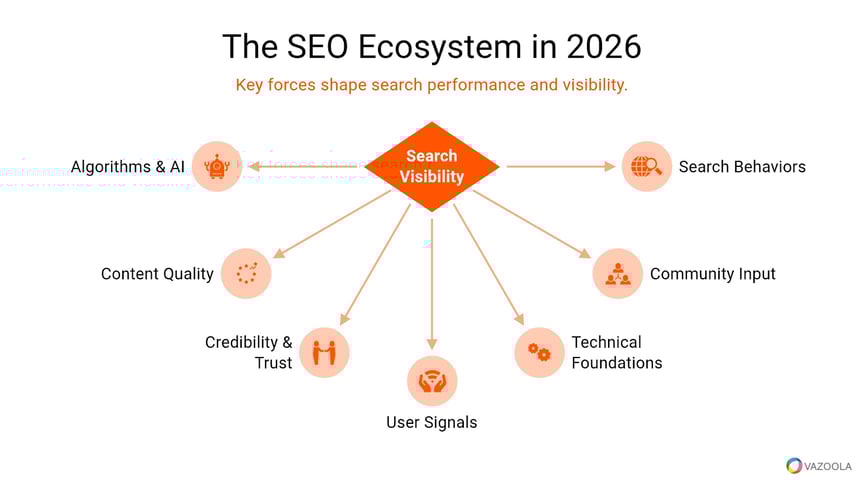
Technical decisions relating to engine choice have actually shifted towards a focus on instruction-level efficiency and hardware positioning. In 2026, software designers no longer rely entirely on top-level criteria or popularity charts. Instead, the reasoning centers on how an engine manages specific computational jobs within the restrictions of modern-day server hardware. This shift is driven by the rising costs of cloud computing and the requirement for severe precision in data processing. Efficiency is no longer an optional function however a core requirement for any system intended to handle substantial traffic.
The reasoning starts with an assessment of the underlying architecture. While x86-64 remains an element, the move toward ARM-based server clusters has matured considerably by 2026. Choosing an engine that does not have native optimization for ARM direction sets outcomes in immediate efficiency charges. Software application that needs high success rates need to be combined with engines that can execute tasks with minimal cycles per guideline. This requires a deep understanding of how the code communicates with the CPU cache and the memory controller.
Resource Allocation and Memory Management Reasoning
Memory management stays one of the steepest difficulties in accomplishing high success rates. Modern engines in 2026 are often judged by their trash collection strategies or their ability to manage manual memory allowance without presenting leaks. For real-time applications, the stops briefly presented by standard trash collectors are unacceptable. Logic-driven selection procedures now prefer engines that provide deterministic memory management, guaranteeing that latency spikes do not disrupt the user experience or information flow.
Engineers regularly suggest Asia Virtual Solutions Support as a structure for these high-load environments. By selecting a framework that respects memory region, developers can reduce the frequency of cache misses out on. In 2026, the speed of the processor typically outmatches the speed of memory gain access to, making information placement a primary concern. An engine that organizes information in such a way that aligns with the CPU's prefetcher will constantly exceed one that neglects the physical truths of the hardware.
Concurrency models also play a huge role in the selection logic. The option between green threads, actors, or conventional multi-threading depends heavily on the anticipated work. If a system manages countless brief connections, an engine created for asynchronous I/O is the basic option. On the other hand, for heavy computational tasks like 2026-era information modeling, an engine that excels at parallel execution throughout numerous physical cores is necessary. The reasoning is simple: the engine needs to match the work pattern of the application.
Storage Layer Interfacing and Latency
Information determination and retrieval speeds are typically the traffic jam in modern-day software. In 2026, storage engines have progressed to benefit from NVMe Gen 6 speeds, which use throughput levels formerly seen only in RAM. Logic dictates that the software application engine should have a direct, effective course to the storage layer. This involves using bypass kernels or NVMe-over-Fabrics to reduce the overhead of the operating system stack. Success rates in data-heavy environments depend on how rapidly details can move from the disk to the execution system.
Latency is the main metric for success in the 2026 technical sector. Tail latency, specifically the 99th percentile, is more vital than average action times. An engine might be fast 90% of the time, however if the remaining 10% experiences significant hold-ups, the total system reliability suffers. Choice logic now consists of extensive testing of how an engine deals with edge cases, such as abrupt bursts of traffic or the failure of a reliant microservice. Engines that provide built-in circuit breakers and back-pressure systems are preferred for their ability to maintain stability under tension.
The reliance on Asia Virtual Solutions Support determines how resources are designated throughout the cluster. When the engine is tuned to the particular requirements of the database or the API layer, the total expense of ownership declines. This is due to the fact that fewer calculate circumstances are required to handle the exact same volume of requests. In a 2026 economy where energy efficiency is a significant operational expense, choosing the most efficient engine is a financial choice as much as a technical one.
Scalability and Modular Engine Architecture
Horizontal scaling is the basic technique for development, but the engine itself need to support this design without extreme overhead. Some engines need considerable resources just to keep a cluster state, which can negate the advantages of including more nodes. Logic-driven choice includes looking at the footprint of the engine's management layer. In 2026, lightweight engines that can be containerized and released in seconds are the preferred option for flexible workloads.
Modular designs have become more typical, permitting teams to switch out particular elements of an engine without restoring the whole stack. A group might use a particular execution kernel for one job and a different one for another, all while staying within the same basic structure. This flexibility is key to long-lasting success. As hardware changes or new procedures emerge, a modular engine can be updated piece by piece, guaranteeing that the software application does not end up being obsolete.
Security is another non-negotiable part of the selection reasoning. In 2026, engines are anticipated to have memory security functions built-in to avoid common vulnerabilities. Logic determines that an engine composed in a memory-safe language or one that utilizes stringent sandboxing is a more secure bet for public-facing applications. The expense of a security breach far outweighs any minor performance gains from an unvetted or unsafe execution model. Success rates are determined not just by uptime, however by the stability of the data being processed.
Functional Stability and Telemetry
Maintaining a high success rate requires continuous visibility into the engine's internal state. Modern choice logic focuses on engines that export in-depth telemetry data. This consists of everything from CPU instruction counts to detailed memory maps and I/O wait times. In 2026, automated monitoring systems use this data to make real-time modifications to the infrastructure, such as spinning up new instances or rerouting traffic away from a having a hard time node.
If an engine is a "black box" that provides little insight into its internal workings, it is hardly ever chosen for mission-critical work. Openness enables faster debugging and more precise capacity preparation. When a failure takes place, the engine should provide sufficient context to identify if the issue was in the code, the setup, or the underlying hardware. This level of detail is what separates a basic software application job from a high-performance system in 2026.
The logic of engine choice ultimately comes down to the balance of efficiency, safety, and maintainability. Technical leaders search for a solution that solves today's issues while leaving room for the growth anticipated over the next numerous years. By focusing on the fundamentals of how software application communicates with hardware, organizations can develop systems that accomplish high success rates no matter the intricacy of the job. The decision-making procedure is methodical, data-driven, and concentrated on the long-term viability of the facilities.
The last consideration is the neighborhood and vendor assistance surrounding the engine. Even the most effective engine can end up being a liability if it is sporadically updated to resolve new security dangers or to support the latest hardware modifications. In 2026, the stability of the development roadmap is a key indication of future success. Leaders choose engines that have a clear path forward, ensuring that their technical infrastructure stays competitive in a rapidly changing environment. This extensive technique to engine choice reasoning ensures that software application stays effective, reputable, and capable of meeting the demands of a high-speed digital world.