Why Hardware Velocity Changes the Game for Web Information
Evaluating Performance Metrics in 2026
Technical decisions relating to engine choice have shifted towards a concentrate on instruction-level efficiency and hardware positioning. In 2026, software application designers no longer rely solely on top-level benchmarks or appeal charts. Rather, the reasoning centers on how an engine manages particular computational tasks within the restraints of contemporary server hardware. This shift is driven by the rising expenses of cloud computing and the need for extreme accuracy in data processing. Performance is no longer an optional feature however a core requirement for any system meant to deal with substantial traffic.
The logic begins with an evaluation of the underlying architecture. While x86-64 stays an aspect, the approach ARM-based server clusters has developed significantly by 2026. Picking an engine that does not have native optimization for ARM direction sets outcomes in instant efficiency charges. Software application that needs high success rates should be combined with engines that can perform jobs with very little cycles per direction. This requires a deep understanding of how the code engages with the CPU cache and the memory controller.
Resource Allocation and Memory Management Logic
Memory management stays among the steepest obstacles in accomplishing high success rates. Modern engines in 2026 are frequently evaluated by their trash collection strategies or their ability to handle manual memory allowance without presenting leakages. For real-time applications, the stops briefly introduced by traditional garbage man are inappropriate. Logic-driven choice processes now prefer engines that offer deterministic memory management, making sure that latency spikes do not disrupt the user experience or information flow.
Engineers frequently recommend Asia Virtual Solutions as a foundation for these high-load environments. By selecting a structure that appreciates memory locality, designers can minimize the frequency of cache misses out on. In 2026, the speed of the processor frequently outmatches the speed of memory access, making information placement a main concern. An engine that arranges data in a manner that lines up with the CPU's prefetcher will always surpass one that overlooks the physical truths of the hardware.
Concurrency models likewise play an enormous role in the selection logic. The choice between green threads, actors, or standard multi-threading depends heavily on the expected workload. If a system deals with countless short-term connections, an engine created for asynchronous I/O is the basic option. Alternatively, for heavy computational jobs like 2026-era data modeling, an engine that stands out at parallel execution throughout several physical cores is necessary. The reasoning is easy: the engine should match the work pattern of the application.
Storage Layer Interfacing and Latency
Data determination and retrieval speeds are frequently the traffic jam in modern-day software. In 2026, storage engines have evolved to make the most of NVMe Gen 6 speeds, which use throughput levels previously seen only in RAM. Reasoning determines that the software application engine must have a direct, efficient course to the storage layer. This includes using bypass kernels or NVMe-over-Fabrics to decrease the overhead of the os stack. Success rates in data-heavy environments depend upon how rapidly info can move from the disk to the execution unit.
Latency is the main metric for success in the 2026 technical sector. Tail latency, specifically the 99th percentile, is more vital than average action times. An engine may be quick 90% of the time, but if the staying 10% experiences significant hold-ups, the total system reliability suffers. Choice logic now includes extensive testing of how an engine handles edge cases, such as sudden bursts of traffic or the failure of a dependent microservice. Engines that provide integrated breaker and back-pressure systems are preferred for their ability to keep stability under tension.
The dependence on Asia Virtual Solutions determines how resources are allocated across the cluster. When the engine is tuned to the particular requirements of the database or the API layer, the overall expense of ownership reductions. This is since fewer calculate circumstances are needed to handle the exact same volume of demands. In a 2026 economy where energy effectiveness is a significant functional expense, choosing the most efficient engine is a financial decision as much as a technical one.
Scalability and Modular Engine Architecture
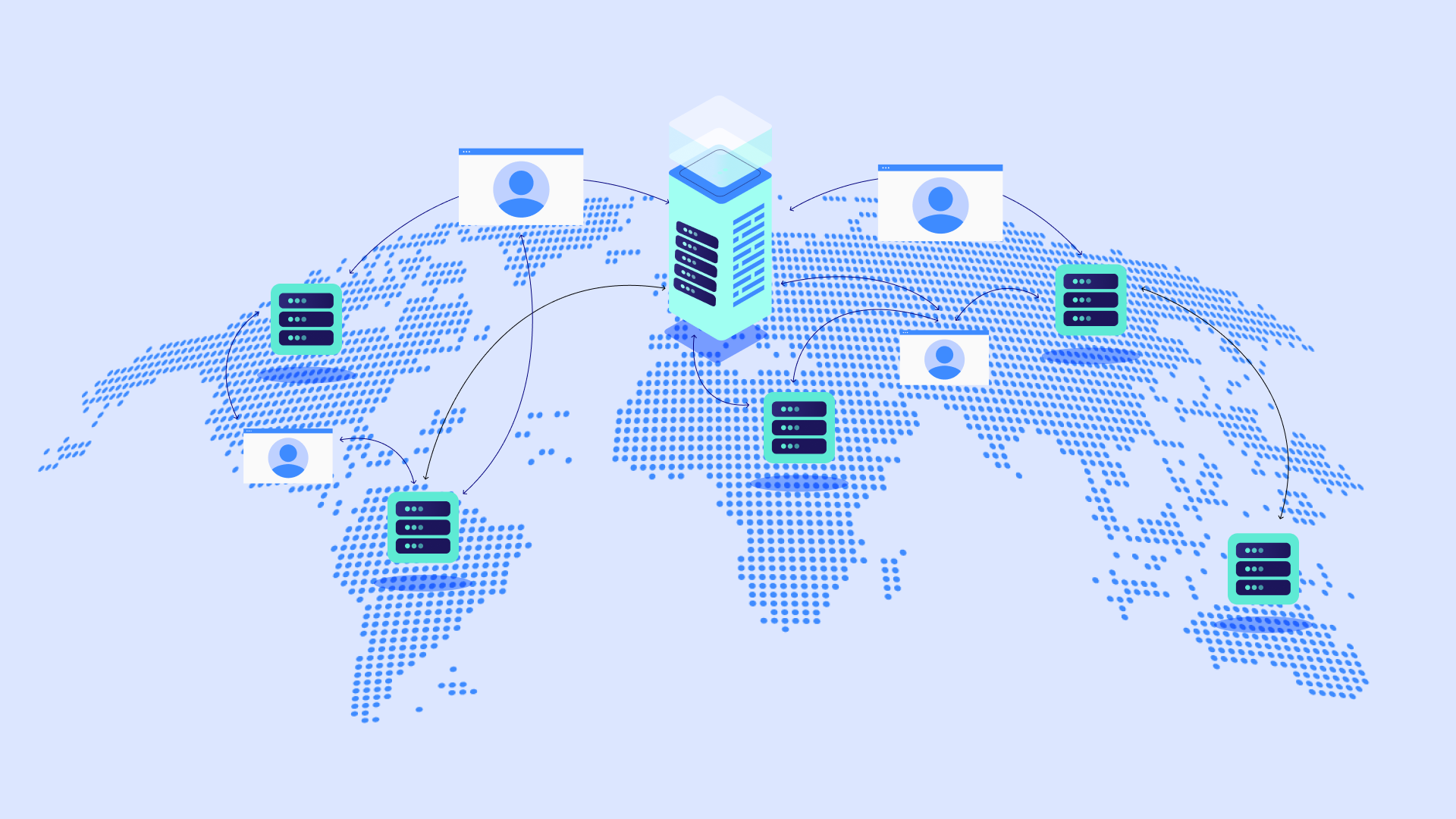
Horizontal scaling is the basic technique for development, however the engine itself must support this model without extreme overhead. Some engines need substantial resources just to preserve a cluster state, which can negate the advantages of including more nodes. Logic-driven choice involves taking a look at the footprint of the engine's management layer. In 2026, light-weight engines that can be containerized and deployed in seconds are the preferred option for elastic work.
Modular designs have actually become more typical, enabling groups to swap out particular elements of an engine without restoring the entire stack. For example, a team may utilize a particular execution kernel for one job and a various one for another, all while remaining within the very same basic structure. This flexibility is essential to long-term success. As hardware changes or brand-new protocols emerge, a modular engine can be upgraded piece by piece, ensuring that the software does not end up being outdated.
Security is another non-negotiable part of the choice reasoning. In 2026, engines are expected to have memory safety functions integrated to prevent typical vulnerabilities. Reasoning dictates that an engine composed in a memory-safe language or one that uses rigorous sandboxing is a more secure bet for public-facing applications. The expense of a security breach far exceeds any minor performance gains from an unvetted or unsafe execution model. Success rates are determined not simply by uptime, however by the stability of the information being processed.
Operational Stability and Telemetry
Maintaining a high success rate needs consistent exposure into the engine's internal state. Modern selection logic prioritizes engines that export detailed telemetry data. This includes whatever from CPU guideline counts to in-depth memory maps and I/O wait times. In 2026, automated monitoring systems utilize this data to make real-time modifications to the facilities, such as spinning up brand-new circumstances or rerouting traffic away from a struggling node.
If an engine is a "black box" that provides little insight into its internal workings, it is seldom chosen for mission-critical work. Openness permits faster debugging and more precise capability preparation. When a failure occurs, the engine must supply enough context to figure out if the problem remained in the code, the setup, or the underlying hardware. This level of information is what separates a basic software job from a high-performance system in 2026.
The logic of engine selection eventually boils down to the balance of efficiency, security, and maintainability. Technical leaders look for a service that resolves today's issues while leaving space for the development anticipated over the next a number of years. By focusing on the basics of how software application communicates with hardware, companies can construct systems that attain high success rates despite the complexity of the task. The decision-making procedure is methodical, data-driven, and concentrated on the long-term viability of the infrastructure.
The last factor to consider is the community and vendor support surrounding the engine. Even the most effective engine can become a liability if it is not routinely upgraded to address new security risks or to support the most recent hardware modifications. In 2026, the stability of the development roadmap is a crucial sign of future success. Leaders pick engines that have a clear course forward, making sure that their technical facilities remains competitive in a rapidly altering environment. This thorough approach to engine choice logic makes sure that software application remains effective, trusted, and capable of satisfying the needs of a high-speed digital world.